
The Mistake Everyone Makes First
Most homeowners reach for a can of WD-40 and spray down the whole track, the hinges, and the opener itself. It's tempting because it's cheap, it's probably already sitting on a shelf in the garage, and the door does sound a little quieter for a day or two. The problem is that WD-40 is a solvent, not a lubricant. It loosens whatever grease is already in there, attracts dust and pollen, and in Ocala's humidity that mix turns into a gritty paste on your rollers and hinges. A few weeks later the squeak comes back louder than before, and you've washed out the factory grease the opener's chain or belt actually needed.
Before you spray anything, it helps to work through the noise in order, cheapest and easiest fix first.
Tools You'll Need
- Socket set or adjustable wrench
- Stepladder
- Work gloves and safety glasses
- Silicone-based or lithium garage door lubricant (not WD-40 or motor oil)
- Flashlight
- Clean rag
- Replacement nylon rollers, if yours are worn (optional, Step 4)
Step-by-Step: From Cheap Fixes to Bigger Repairs
- Find the actual source of the noise. Run the door up and down and listen. A rattle at the top usually means the opener or its mounting bracket. A grinding sound along the sides points to rollers or hinges. A metallic slap near the opener rail is often chain slack. This is a five-minute homeowner job and it saves you from fixing the wrong thing.
- Tighten every bolt you can reach. Track brackets, hinges, the opener's mounting plate, and the header bracket all loosen over time from daily vibration. Homes here also see wood garage framing swell and shift slightly with seasonal humidity, which can work bolts loose faster than in drier climates. A socket wrench and twenty minutes handles this.
- Lubricate the moving parts, not the track. Put a light coat of silicone or lithium-based lubricant on hinges, roller bearings, and the opener's chain or belt, following the owner's manual. Skip the track itself; grease there just collects dust. Avoid petroleum-based sprays on nylon rollers since they can dry out the plastic over time in the heat.
- Replace worn or cracked rollers. Nylon rollers are the usual culprit for grinding noise after a few years of heat expansion and contraction. Steel rollers with exposed bearings tend to rust faster in humid conditions, especially closer to the coast where salt air speeds things along. Swap them one at a time while the door is closed and supported, so the track never loses alignment.
- Check chain or belt tension. A sagging chain slaps against the rail and makes a repetitive clack. Most openers have an adjustment bolt described in the manual; tightening it to the manufacturer's spec often quiets the opener immediately.
- Add vibration isolators at the motor mount. Rubber isolator pads between the opener unit and the ceiling bracket stop the motor's hum from transferring into your house framing. This is a simple DIY upgrade and makes a bigger difference than most people expect.
Where DIY Should Stop
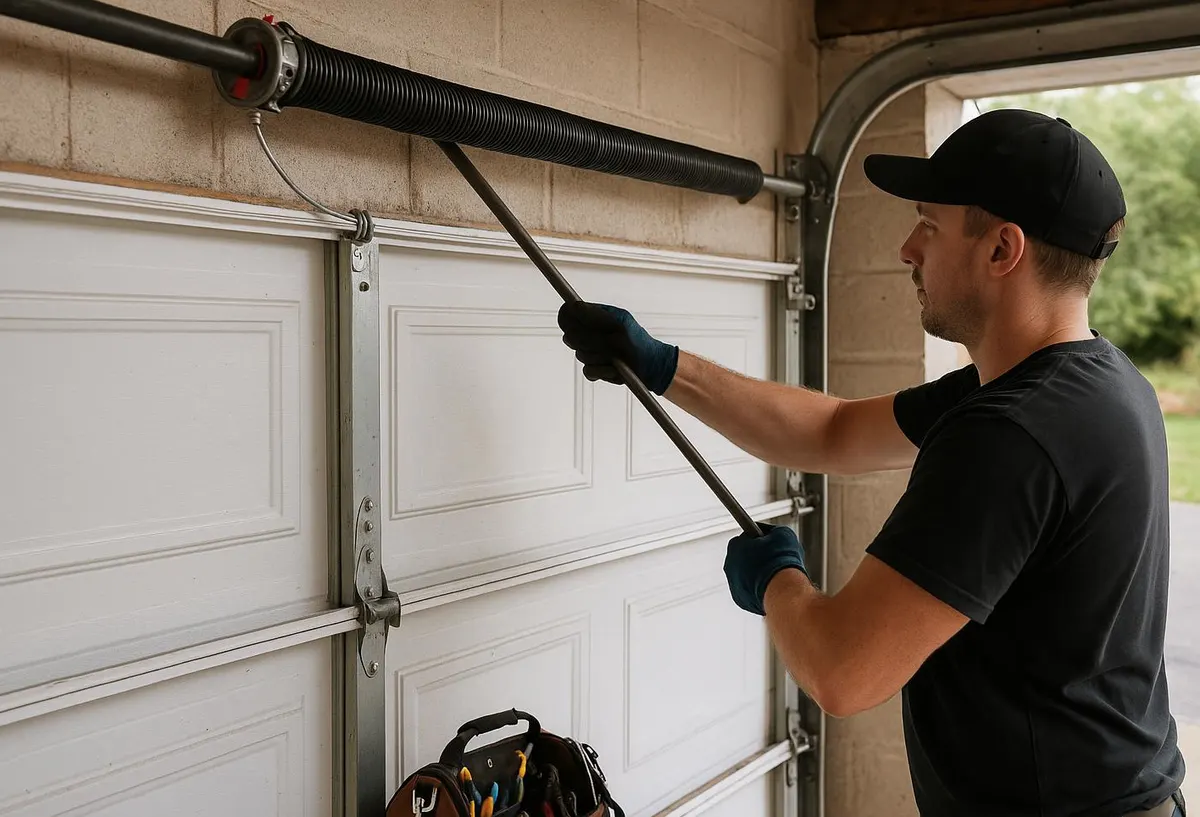
If you hear a loud bang, a grinding noise near the springs above the door, or see visible rust or stretching on the torsion spring itself, stop there. Springs are under heavy tension, and Ocala's humidity and storm-season moisture swings can accelerate corrosion on older coils. Adjusting or replacing them without the right bars and clamps is a genuine injury risk, and it's one of the most common reasons homeowners end up calling a technician anyway, after a DIY attempt goes wrong.
The other point to hand off: if you've tightened, lubricated, and replaced rollers and the opener still whines or grinds from the motor housing itself, the gearing inside may be worn out. At that point it's often more cost-effective to replace a noisy chain-drive opener with a belt-drive unit, which runs quieter and holds up better against humidity-related chain rust. That's an installation job that involves proper mounting, travel limit calibration, and safety reversal testing, not a weekend project.
When to Call Ocala Garage Door Experts
If the noise keeps coming back after you've worked through the steps above, or if it's coming from the springs or the opener's internal gearing, that's the point to call in a technician. We handle Garage Door Opener Repair & Installation for homeowners who are ready to move to a quieter belt-drive system, and our Garage Door Maintenance visits cover a full inspection of springs, cables, rollers, and hardware before the next round of storm season humidity puts more stress on aging parts.
If your opener in Ocala, Belleview, Dunnellon, or anywhere else we serve is still grinding after you've tried the basics, give Ocala Garage Door Experts a call and we'll get it quiet and running right.